Table of contents
The eco-district: a unique visualization challenge
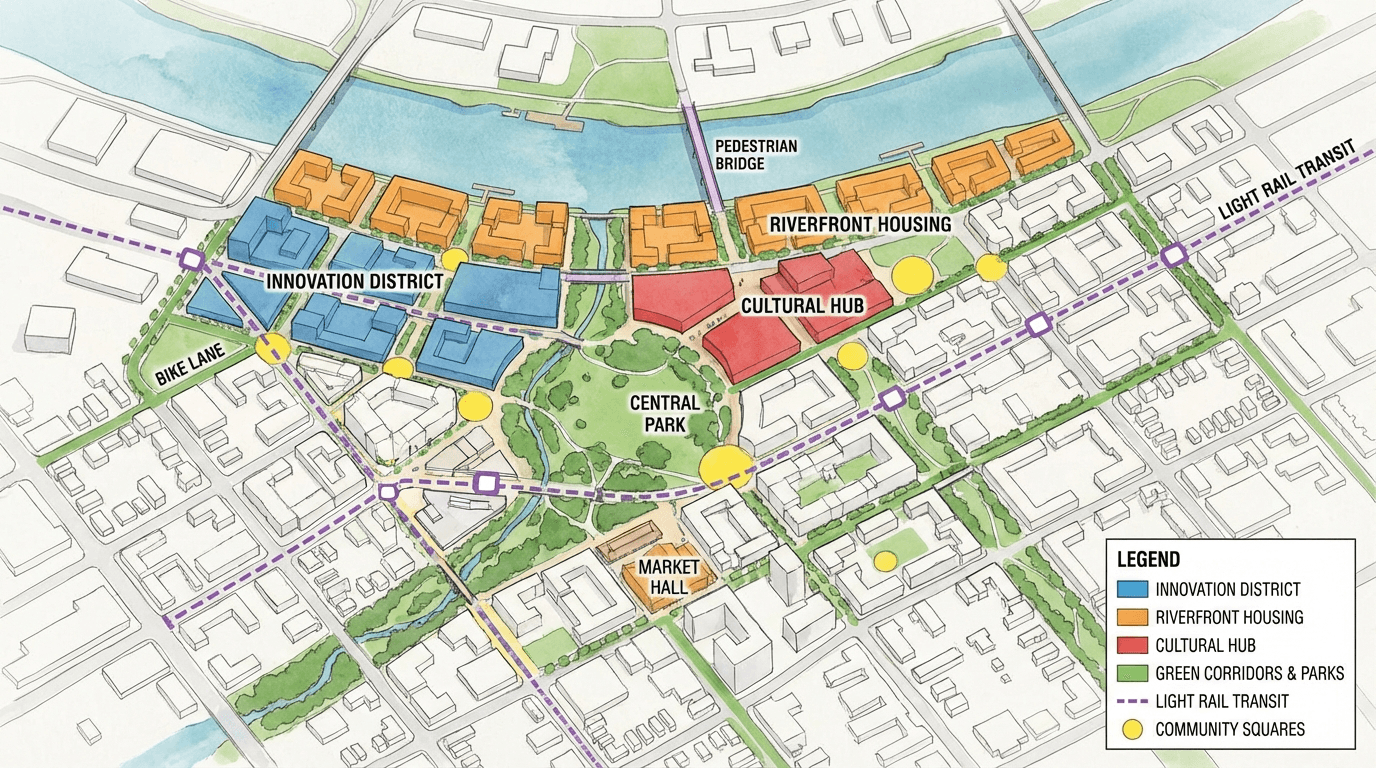
Eco-district projects represent the future of urbanism. They combine housing, green spaces, soft mobility, and local services in an integrated vision. Communicating this vision to stakeholders requires visuals that show not only buildings but the entire urban ecosystem.
AI excels at this task because it can simultaneously integrate architecture, vegetation, roads, and urban furniture into a coherent and realistic visualization.
Eco-district project examples
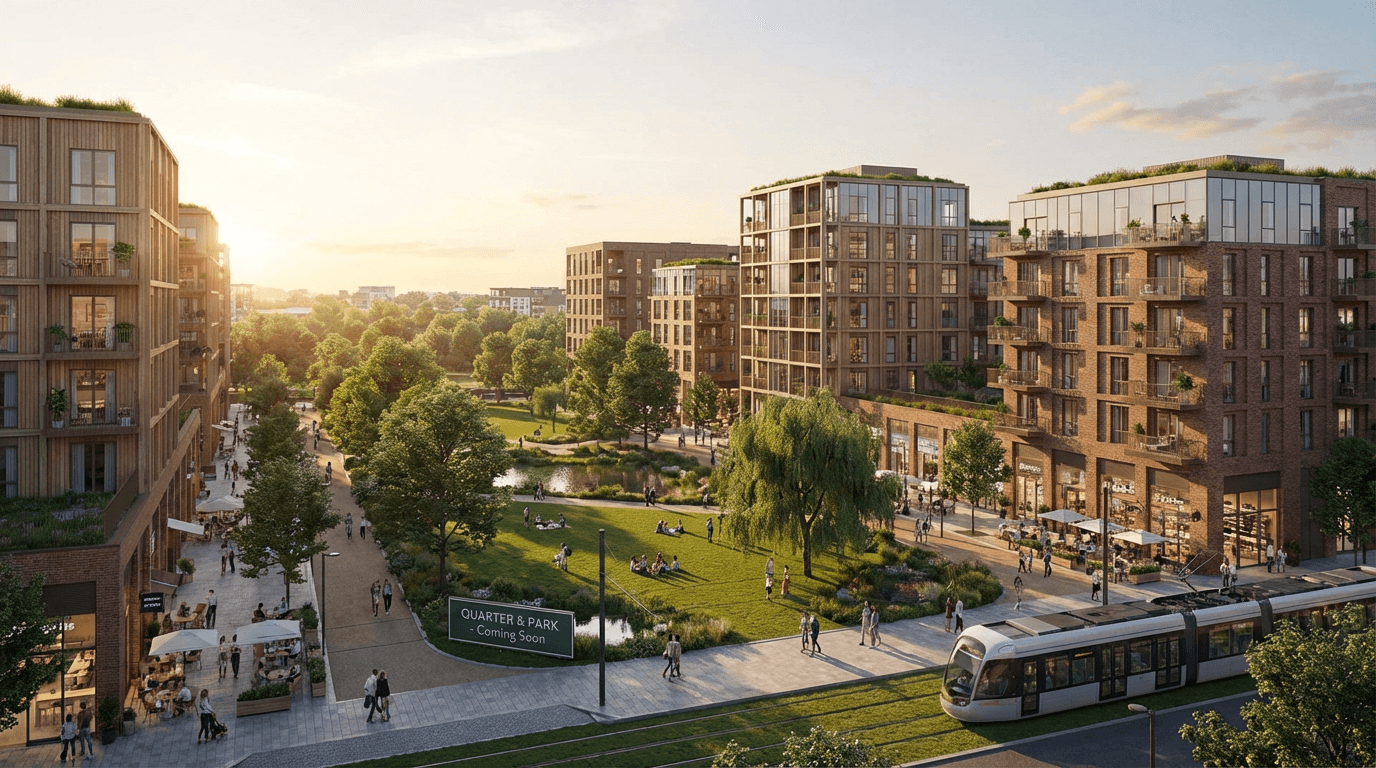
The visualizations presented in this gallery show different types of eco-district projects. Mixed residential complexes with shared spaces, districts integrating rainwater management systems, heat islands with abundant vegetation.
Each visualization shows the project integrated into its existing urban environment, with neighboring streets, buildings, and green spaces. This contextualization allows immediate understanding of the project scale and its impact on the neighborhood.
Vegetation at the heart of the project
In an eco-district, vegetation plays a central role. Green roofs, street trees, shared gardens, and local parks are all elements that AI knows how to integrate into the visualization. The result shows a living, green neighborhood.
AI also handles seasons: you can generate spring visualizations with flowering trees or autumn ones with colorful foliage, depending on which season you want to highlight.
Aerial views to understand the whole
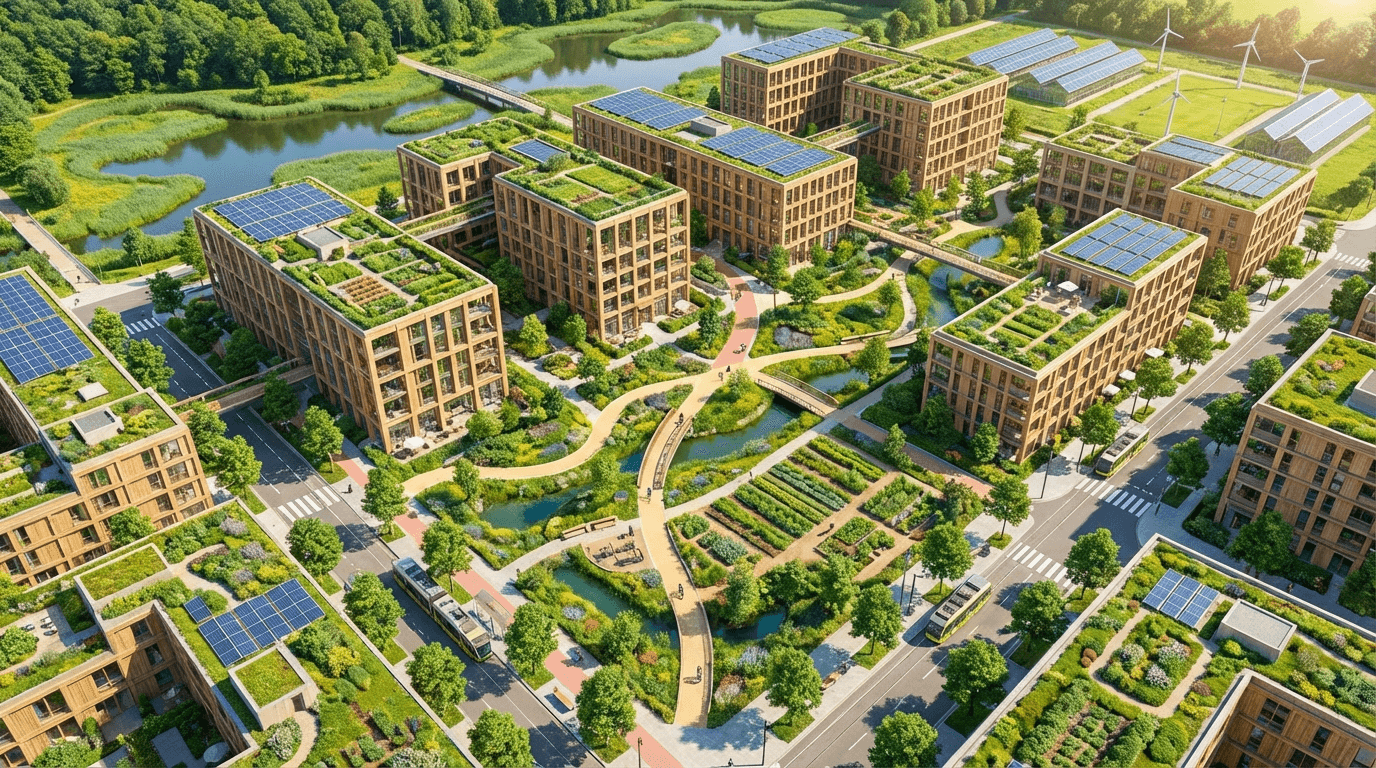
Aerial views are particularly relevant for eco-districts. They show the overall neighborhood organization, soft connections, public spaces, and the relationship with the surrounding urban fabric. AI generates realistic overview shots in seconds.
These views are essential for presentations to officials and during public consultations, where residents want to understand the project's overall impact on their environment.
From design to communication
These visualizations serve every project stage: initial design to test different options, presentations to funders, public communication, marketing materials. The speed of generation allows iterating on the project and producing new visuals with each evolution.
The eco-district is a territorial project requiring buy-in from many stakeholders. Clear and realistic visuals are the best tool for building that buy-in.